The final conference of the "Revitalization project of the hot water network in the area of the City of Zagreb" marked the completion of one of the largest infrastructure investments in the district heating sector in the Republic of Croatia. With a total value of EUR 99 million, 64.5 kilometres of hot water routes, or 129 kilometres of pipes, were revitalized in the area of 27 Zagreb settlements. For its implementation, EUR 49.7 million of European Union grants from the ITU mechanism were secured, while the remaining amount was provided by Hrvatska elektroprivreda.
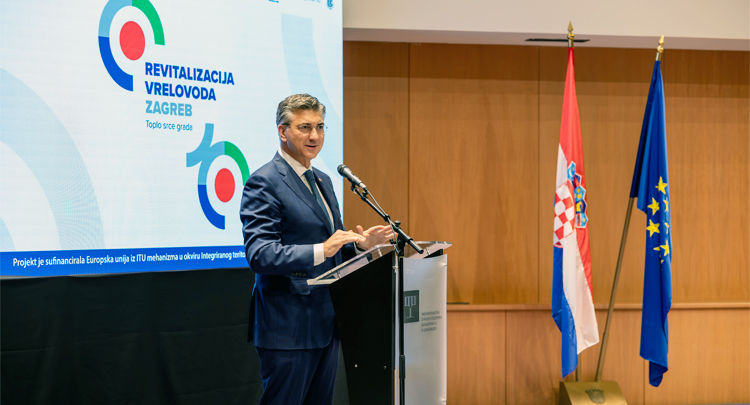
The final conference was attended by the Prime Minister of the Republic of Croatia Andrej Plenković, Minister of Economy Ante Šušnjar, Minister of Regional Development and EU Funds Nataša Mikuš Žigman, Director of the Central Finance and Contracting Agency Dragan Jelić, Director of the Regional Energy and Climate Agency of Northwest Croatia Julije Domac (on behalf of the Mayor of the City of Zagreb), President of the Management Board of Hrvatska elektroprivreda d.d. Vice Oršulić, Director of HEP-Toplinarstvo Tomislav Brnadić and many other guests.
HEP, as a key state-owned company, must remain the flywheel of investment and development in the Croatian economy, as it has been and still is a key lever in the implementation of the Government's measures to mitigate the consequences of the energy crisis. This project is the best example of how the successful synergy of the Government, HEP and the City of Zagreb in the use of EU funds can bring improvements and visible changes for our citizens, said Prime Minister Andrej Plenković.
It is expected that the revitalization will result in a reduction in heat losses by approximately 28 percent, operating water replenishment losses by approximately 47 percent, the number of emergency interventions on the reconstructed sections of the hot water pipeline by 90 percent and pollutant emissions into the environment by 11,104 tonnes compared to the reference year.
Today, due to the use of fossil fuels, we perceive Toplinarstvo (district heating) as an outdated system. HEP should be at the forefront of the implementation of new technologies, and each subsequent phase of modernization must be more ambitious, with greater investments aimed at reducing losses in the network. Geothermal energy and the possibility of developing a power plant that would use energy from waste to produce thermal energy are particularly emphasized. By modernizing the heating system in the city of Zagreb, we are joining the developed western countries because we are creating the basis for the future connection of geothermal sources and the development of green and sustainable heating. In this way, we will provide our fellow citizens with lower utility bills, said Minister of Economy Ante Šušnjar.
The project of revitalization of the Zagreb hot water network is the result of joint efforts at the national and local level and the use of European funds in the realization of large infrastructure investments.
HEP Group, including HOPS, has so far successfully implemented more than 70 projects co-financed by European funds in the total amount of more than EUR 730 million, which makes us one of Croatia's leaders in the withdrawal and efficient use of European funds. We have proven that we have the knowledge, vision and operational strength to manage large projects. In addition to extensive investments in the electricity transmission and distribution network, the revitalization of the Zagreb hot water pipeline is the crown of these efforts, said Vice Oršulić, President of HEP's Management Board.
The Zagreb hot water network covers 243 kilometres of routes and supplies heat to more than 100,000 end customers. Before the revitalization, more than half of the network was over 40 years old.
Modernization of the hot water network is essential for a safe and reliable supply of thermal energy. In the first and second phases of the project, we revitalized a third of Zagreb's hot water network, using modern technology of pre-insulated pipes. We are aware that the works, which took place in numerous urban settlements, have affected the everyday life of our fellow citizens. That is why I sincerely thank them for their patience, understanding and support. I would also like to thank our workers, contractors and all associates who enabled the successful implementation of the project, said the director of HEP-Toplinarstvo, Tomislav Brnadić.
The project completion represents an important step in the modernization of Zagreb's district heating system, but it is not the final investment in its infrastructure. In this year alone, HEP-Toplinarstvo has continued with the implementation of a long-term and systematic programme for the renovation of the Zagreb hot water network, with the aim of ensuring a more reliable, efficient and sustainable supply of thermal energy. As part of the project third phase, 6.4 kilometres of the route, or 12.8 kilometres of pipes, have already been replaced.
In the period from 2027 to 2030, the implementation of the fourth phase of the project is planned, which includes an additional 47 kilometres of the hot water route, i.e. 94 kilometres of pipes. For the project third and fourth phase, HEP-Toplinarstvo submitted a grant application from the Modernization Fund.
With the continuous renovation of the hot water network, HEP-Toplinarstvo wishes to ensure the long-term reliability of the district heating infrastructure, reduce heat energy losses, improve the energy efficiency of the system and increase the security of supply for more than 100,000 end customers of heat energy in the city of Zagreb. These are investments which effects will be felt in the decades to come, and which create the foundations for the next-generation sustainable heating system of Croatia's capital.